NuTag
Turning a Functional Benefit into a Strategic Value Driver NuTag was conceived as a premium toll and parking solution embedded within Nubank’s Ultravioleta credit card. Rather than launching “another tag product,” the ambition was to strengthen the perceived value of the premium offering through a service integrated into customers’ daily financial behavior. At the time, Ultravioleta had a solid positioning but an adoption rate of around 11% within its eligible base. The opportunity was not incremental feature expansion - it was increasing relevance.
00
.context
The Brazilian toll and parking tag market was already mature, dominated by established players. Customers were accustomed to using external services, often through prepaid models disconnected from their banking experience. We identified a key behavioral signal: many Ultravioleta customers were already transferring money to competitor tag providers. The behavior existed. The financial relationship existed. What was missing was integration within the Nubank ecosystem. This insight reframed the project from feature development to ecosystem capture. Discovery & Behavioral Segmentation: Through user research and transaction analysis, we identified two primary behavioral segments - a. Commuters primarily using toll roads b. Urban users primarily using parking services More importantly, we worked closely with the data team to define eligibility based on real behavioral indicators. Instead of launching broadly, we targeted customers with high usage propensity. This approach reduced adoption risk and aligned product distribution with demonstrated need.
.strategy
An early internal debate centered on launch sequencing: should we introduce a generic version first, or start with the premium segment? We advocated for a premium-first strategy. Launching NuTag exclusively within Ultravioleta reinforced the card’s value proposition and elevated the benefit beyond a commoditized utility. It positioned NuTag not as an add-on, but as part of the premium ecosystem. This strategic decision directly impacted performance outcomes. A Critical Product Decision: The Interactive Map One of the most strategic design decisions was the inclusion of a dynamic interactive map displaying accepted toll and parking locations. This was not a functional requirement for payment. It was a deliberate move to increase utility. The decision carried technical risks, including performance constraints and dependency on third-party data. However, we prioritized long-term engagement over minimal viability. The outcome validated the bet: while cashback drove adoption, the map drove usage. Customers began consulting the app proactively before trips and parking, transforming the experience from transactional to consultative.
year
2022-2023
timeframe
180 days
tools
Figma
client
Nubank
.inicial rollout
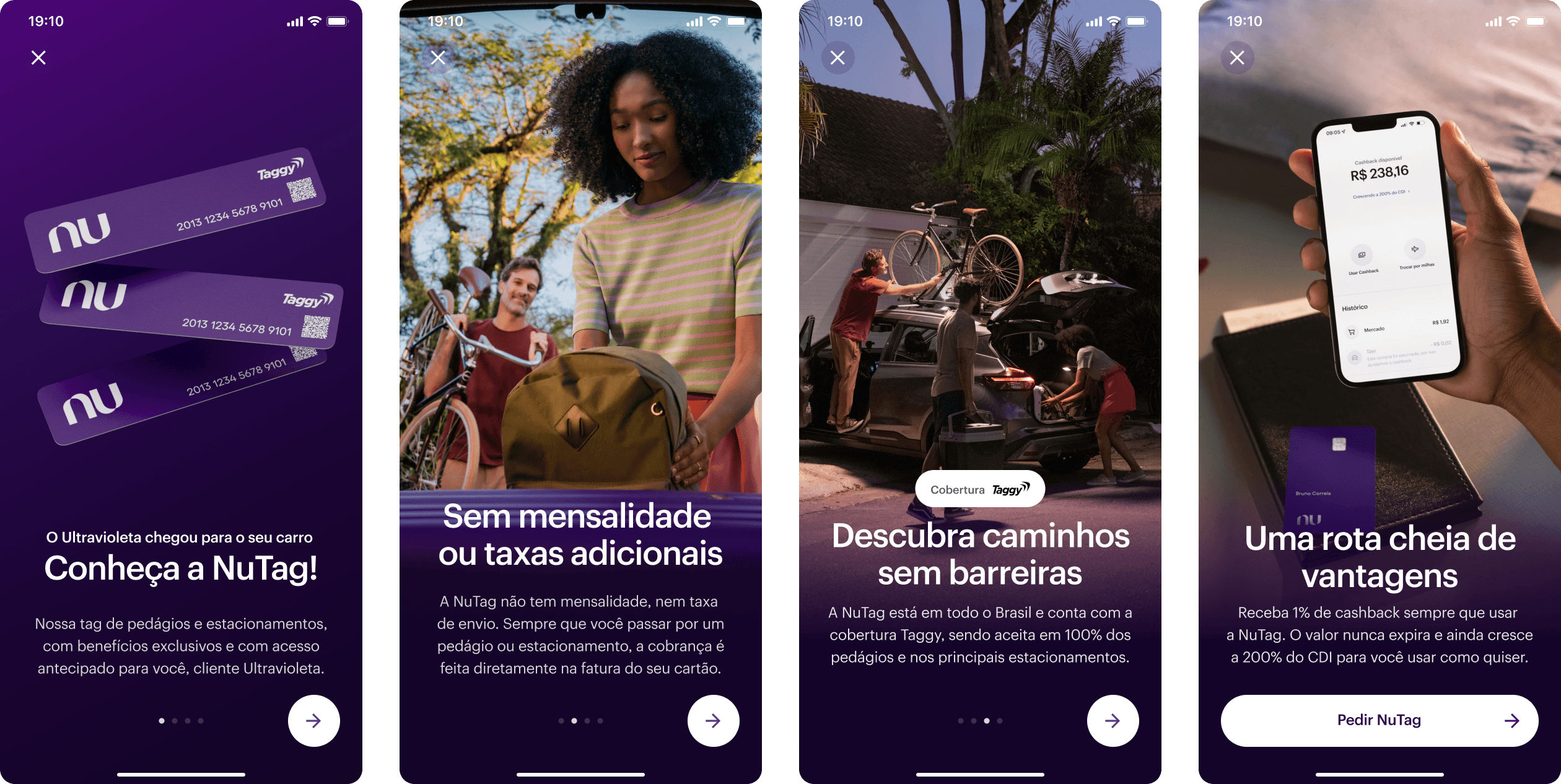
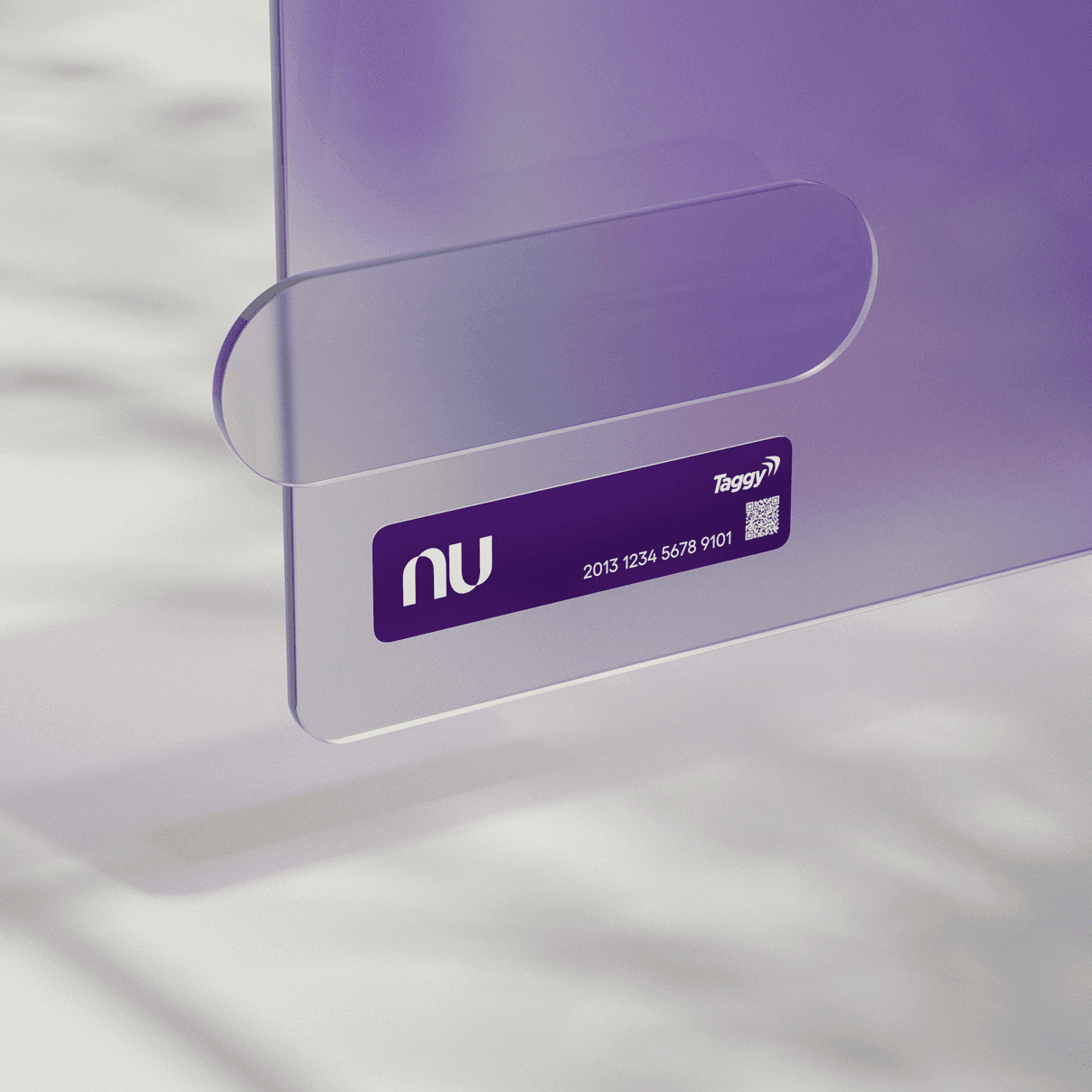
NuTag required connecting a physical product - the toll tag - to a fully digital banking environment.
The experience needed to be:
Transparent in billing, directly tied to the credit card
Clear in cashback tracking and transaction history
Simple during activation
Reliable in everyday usage
The experience presented on the landing page extends seamlessly into the Nubank app. Within the app, users also have access to the interactive map, with up-to-date information on where NuTag is accepted.
This integration ensures consistency across channels and positions NuTag as a living product within the ecosystem, supporting the user before, during, and after each use.
We designed end-to-end flows covering request, activation, multi-tag management, and detailed transaction history. Special attention was given to onboarding and education, especially due to the physical sensitivity of the tag device.
.my role
I led the end-to-end UX strategy as the sole Product Designer on the initiative.
My responsibilities included:
Defining the experience architecture
Proposing and validating behavioral eligibility strategy
Designing activation and management flows
Advocating for and implementing the interactive map
Participating in executive reviews and leadership presentations
Negotiating integration constraints with the white-label partner
Aligning product narrative with content and brand strategy
While I had autonomy in proposing solutions, decisions required executive validation. I led discussions through structured arguments grounded in behavioral insight and product strategy.
.landing page
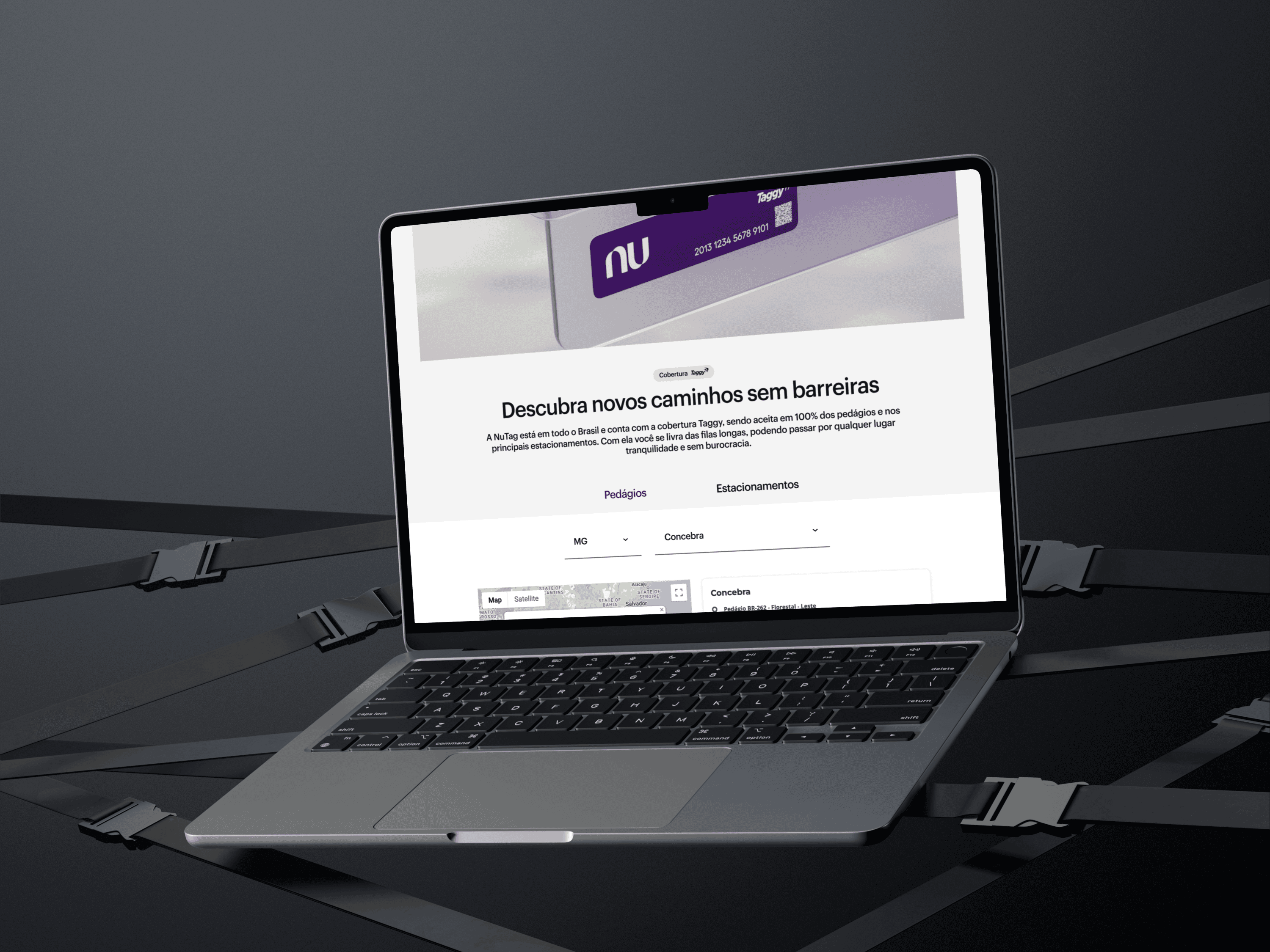
The launch landing page was designed as the primary communication touchpoint, focusing on clarity and immediate value. It explains what NuTag is, how automatic payments work, and highlights the key benefits for Ultravioleta customers - no monthly fees, direct billing on the credit card statement, and cashback.
One of the main differentiators on the landing page is the interactive map, which shows in real time where NuTag is accepted. By highlighting not only toll roads but also automated parking locations, the map expands the perceived usefulness of the product in everyday urban mobility.
.tag management
I designed the NuTag management experience with a horizontal and conversational approach, allowing users to quickly understand the status of each tag. The interface clearly communicates whether a tag is active, linked to a specific vehicle, or ready for use.
This structure supports more complex scenarios, such as users with multiple tags or tags used across different vehicles, including corporate use cases. The goal was to reduce cognitive load, avoid deep navigation, and enable fast, efficient status recognition.
.pilot powerd by Taggy
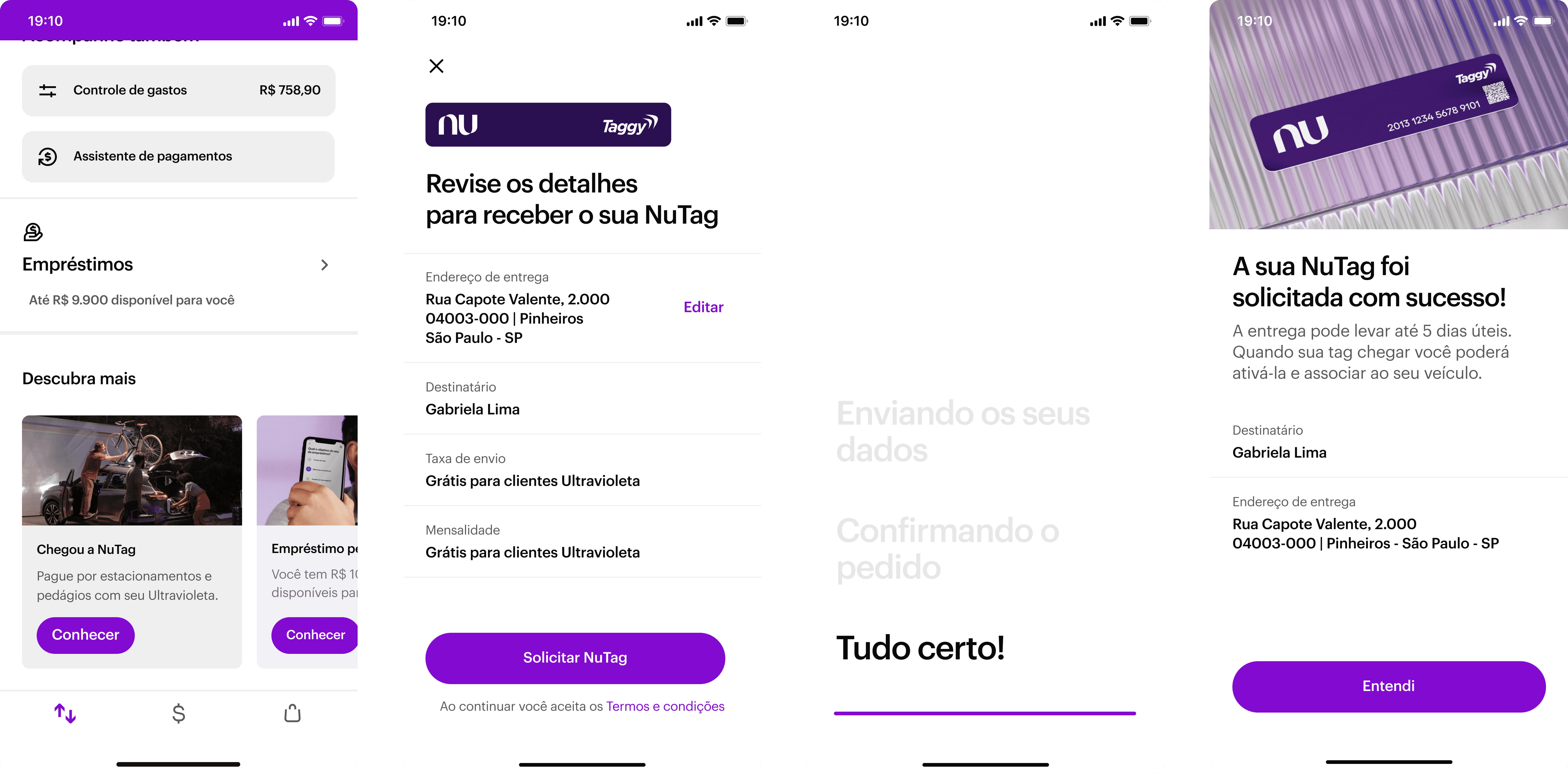
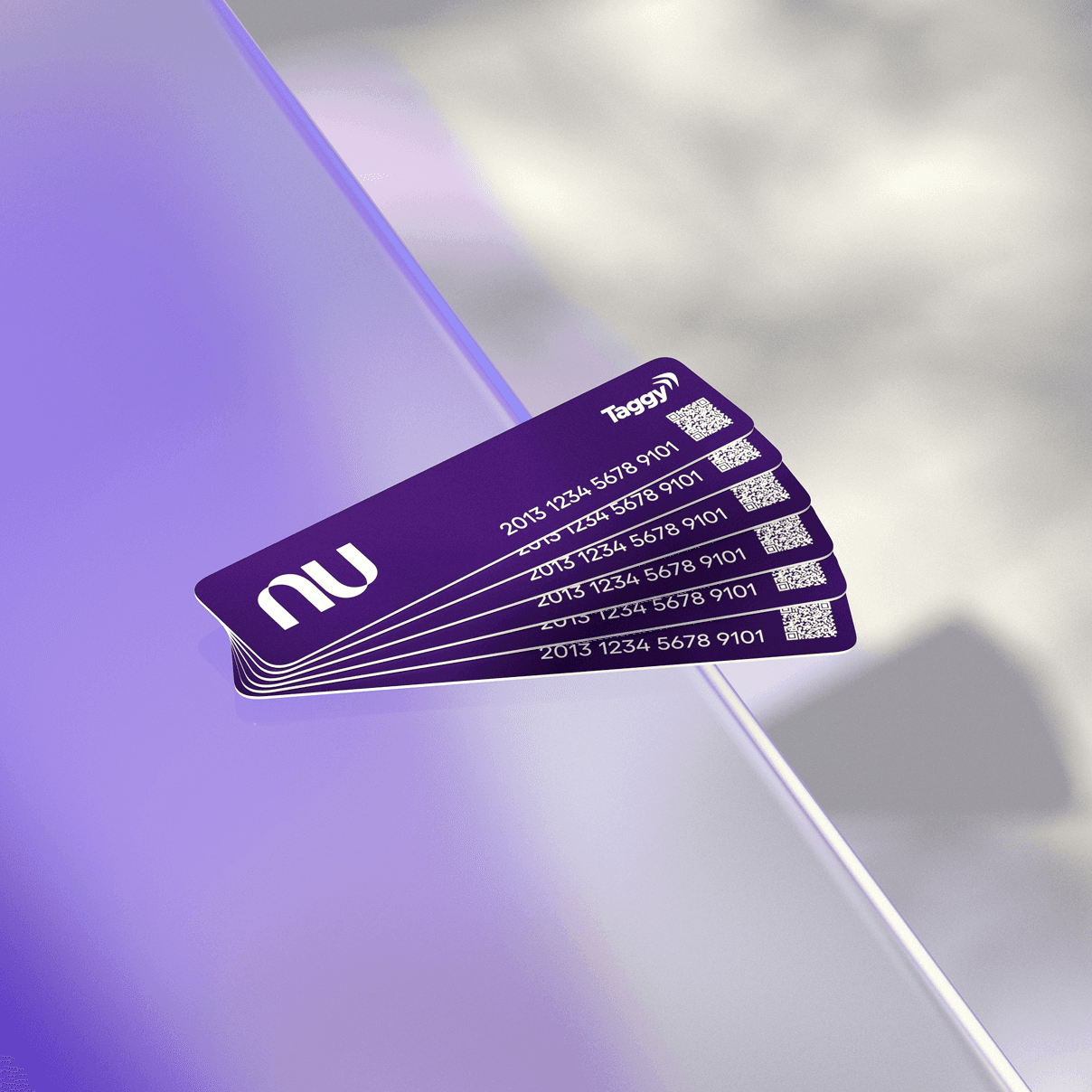
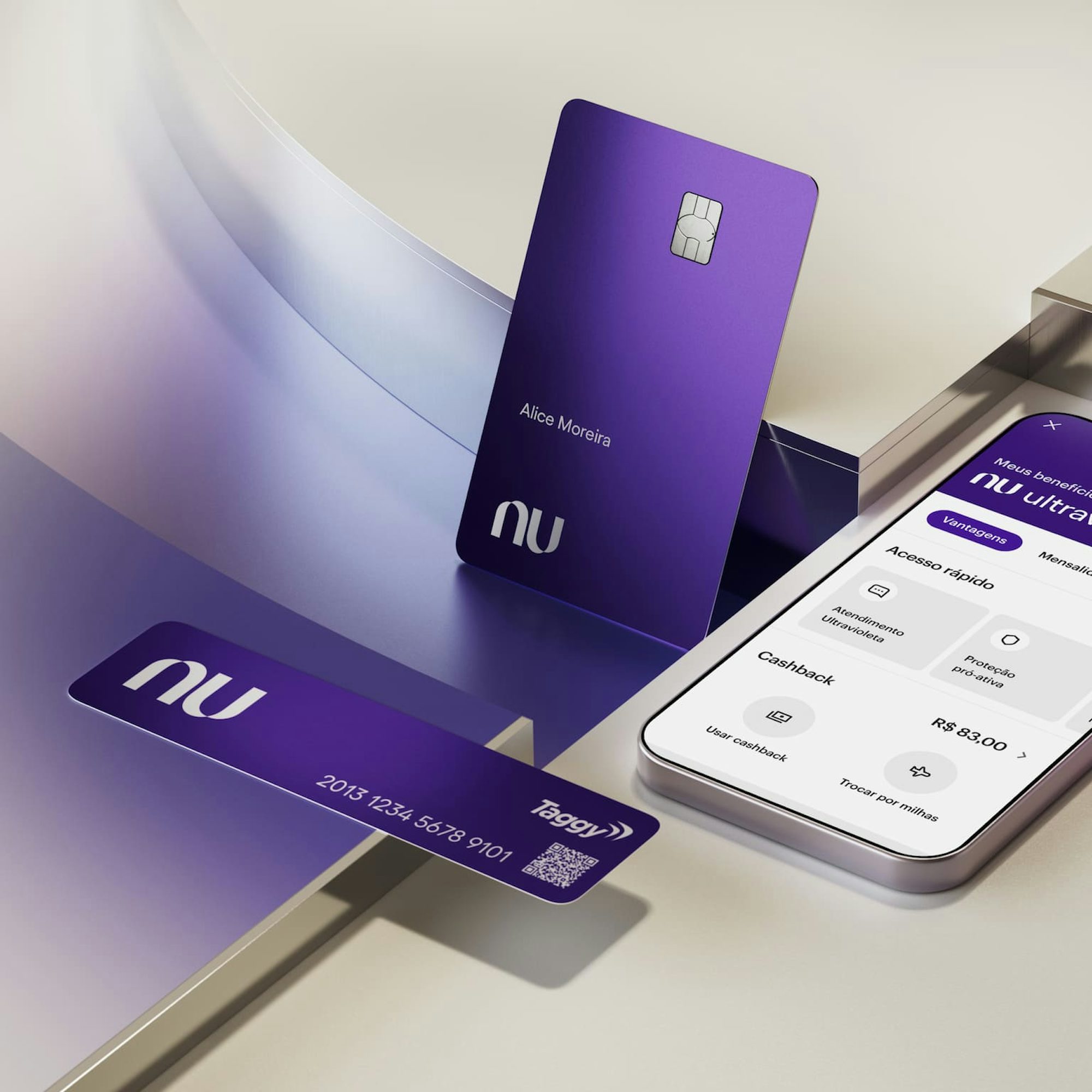
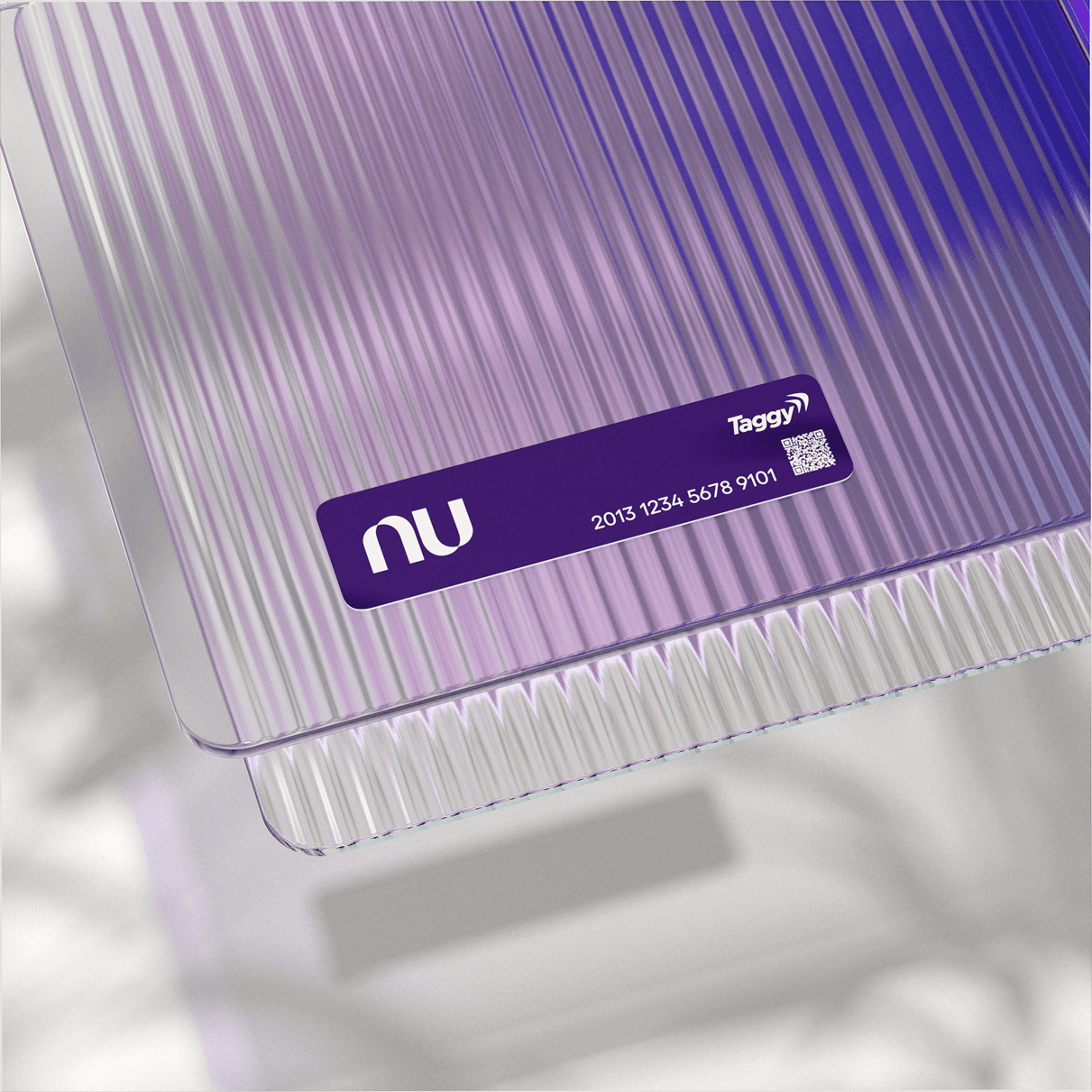
NuTag was initially launched as a pilot with 10,500 Ultravioleta customers. At this stage, customers received a dedicated welcome kit containing the physical tag, along with an updated Ultravioleta welcome kit that already included NuTag as part of the experience.
After incorporating learnings from the pilot, the product was rolled out to the eligible customer base and achieved strong early adoption, validating the UX, communication, and positioning decisions made during Discovery.
.numbers and impact
The adoption target was 18%.
We achieved 23%.
NuTag adoption exceeded even the historical adoption rate of Ultravioleta itself.
Retention metrics further demonstrated product-market alignment:
92% active after 60 days
71% active after 90 days
Stabilization at approximately 68%
For an optional benefit, these figures indicated sustained value perception.
Following launch, organic interest increased significantly, including waitlist growth. The foundational structure was later adapted for broader product segments.
.final reflection
NuTag reinforced a core belief in my product practice: differentiation does not emerge from interface aesthetics alone. It comes from strategically embedding services into existing user behavior.
By capturing an established habit and integrating it within the financial ecosystem, we transformed a functional benefit into a measurable value driver for a premium product.
The project required balancing user insight, technical feasibility, operational risk, and brand positioning, not simply delivering screens.
01
02
03